EASD 2026 Tech Update: Less Bolusing, New Pumps and Sensors Beyond Glucose
Oct 11, 2026
EASD 2026 is over, and there is plenty to catch up on.
With more than 16,000 participants, EASD 2026 appears to be the world’s largest international diabetes congress by attendance.
And diabetes technology certainly gave us enough to talk about.
Smaller pumps. Algorithms that make meal boluses optional. Sensors measuring glucose and ketones together. And even a wearable lactate monitor.
Here are my 10 technology highlights, with a closer look at what they could mean for people living with diabetes and the teams supporting them.
Information checked on 8 October 2026. Updates shared during congress presentations or booth discussions are identified as such; launch plans and local availability may change.
1. MiniMed Flex: a European rollout planned for November
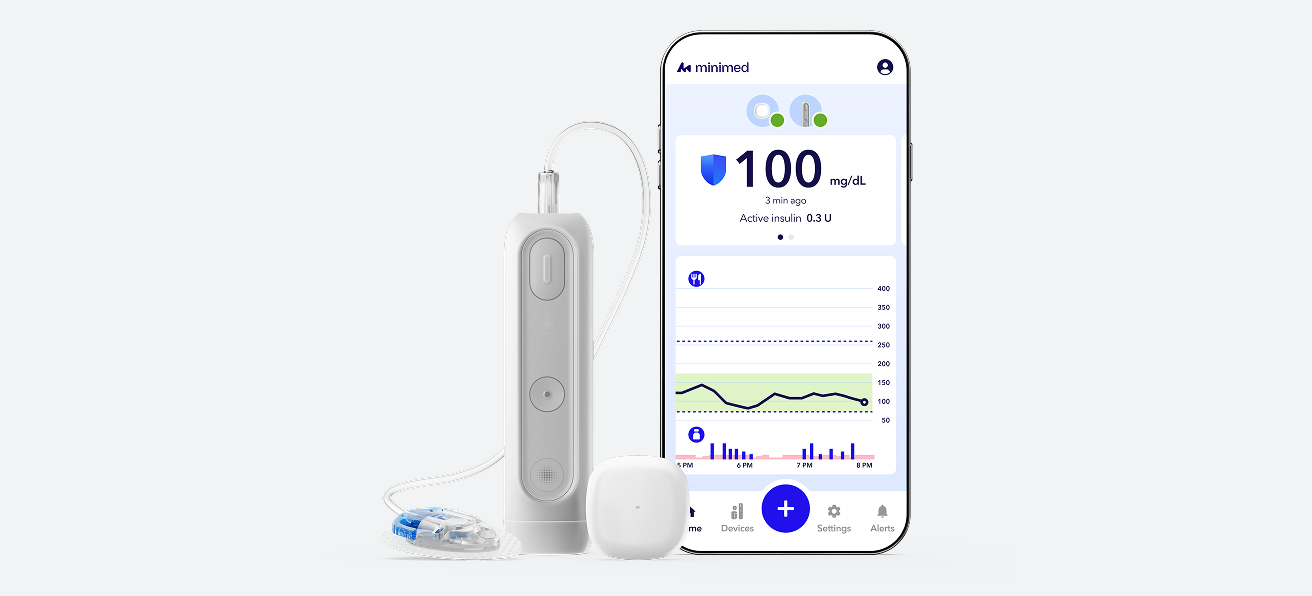
Image: MiniMed Flex Pump with Simplera Sync (Source: MiniMed)
The MiniMed Flex is getting closer to European users.
At EASD, we were told that the first rollout is planned for mid-November 2026 in several markets: Belgium, Luxembourg, Italy, Spain, Portugal, Greece, Norway, Sweden, Finland, Denmark, Austria, Switzerland, Slovenia, the UK and Israel. Other countries are expected to follow.
The plan shared at the congress is to start with:
- the MiniMed app on compatible Android and iOS phones;
- the Simplera Sync CGM, with Instinct integration to follow;
- the SmartGuard algorithm, with a future Vivera update targeted for 2027.
The pump’s CE marking is confirmed in MiniMed’s regulatory filings. The detailed country schedule above comes from our EASD discussions.
What about people already using a MiniMed 780G?
We heard that upgrade options to Flex are being planned, potentially without an additional charge in some markets. Eligibility will depend on local arrangements, so this is something to check with the local MiniMed team and diabetes centre before making plans.
The practical takeaway: Flex is moving closer, but the pump launch, sensor integrations and future algorithm update are separate steps.
2. Vivera: choosing whether to bolus, meal by meal
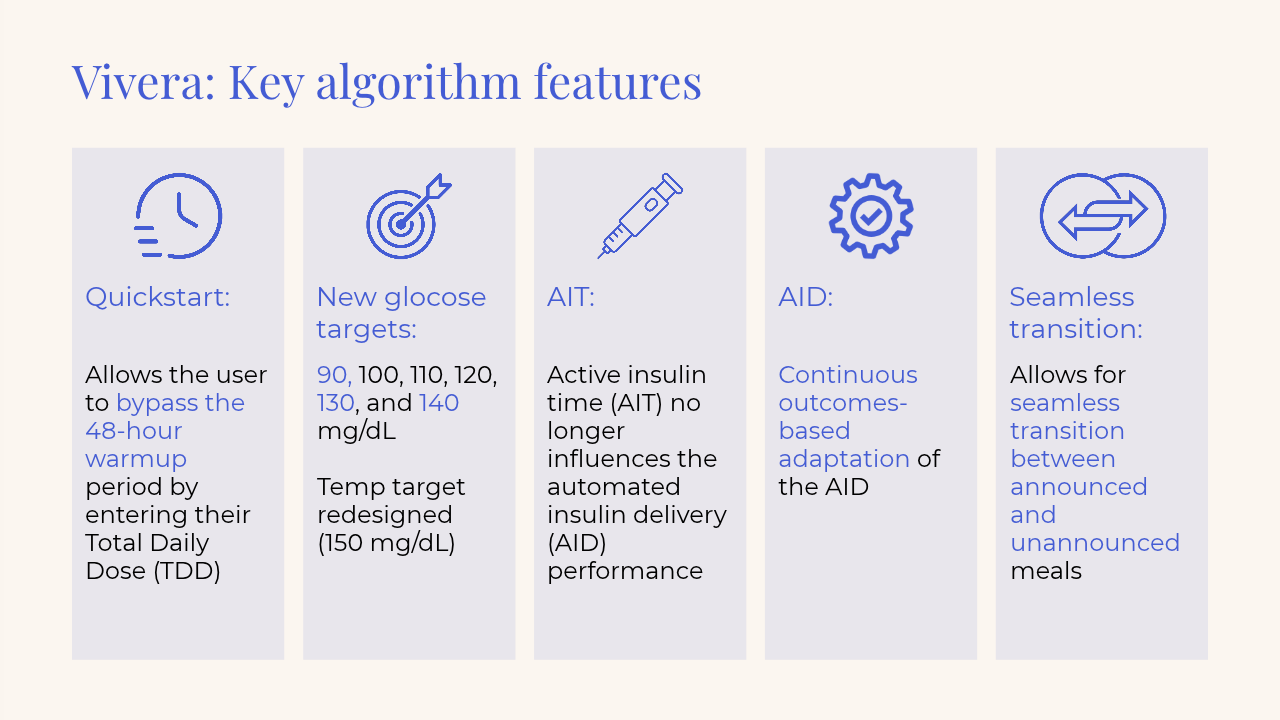
Image: Vivera key algorithm features (Adapted from previous presentations from MiniMed)
Vivera is MiniMed’s investigational algorithm designed to make meal announcements optional.
The features presented at EASD included
- glucose targets from 90 to 140 mg/dL and temp target 150 mg/dL (5.0–8.3 mmol/L)
- and starting automode without the current 48-hour warmup period.
But the most interesting part is the flexibility: users could decide at each meal whether to announce it.
Professor Cohen also explained that Vivera is designed to operate without a minimum total daily insulin requirement, allowing it to remain in automated mode when insulin needs are very low, such as during the honeymoon phase, or when delivery temporarily needs to stop during exercise.
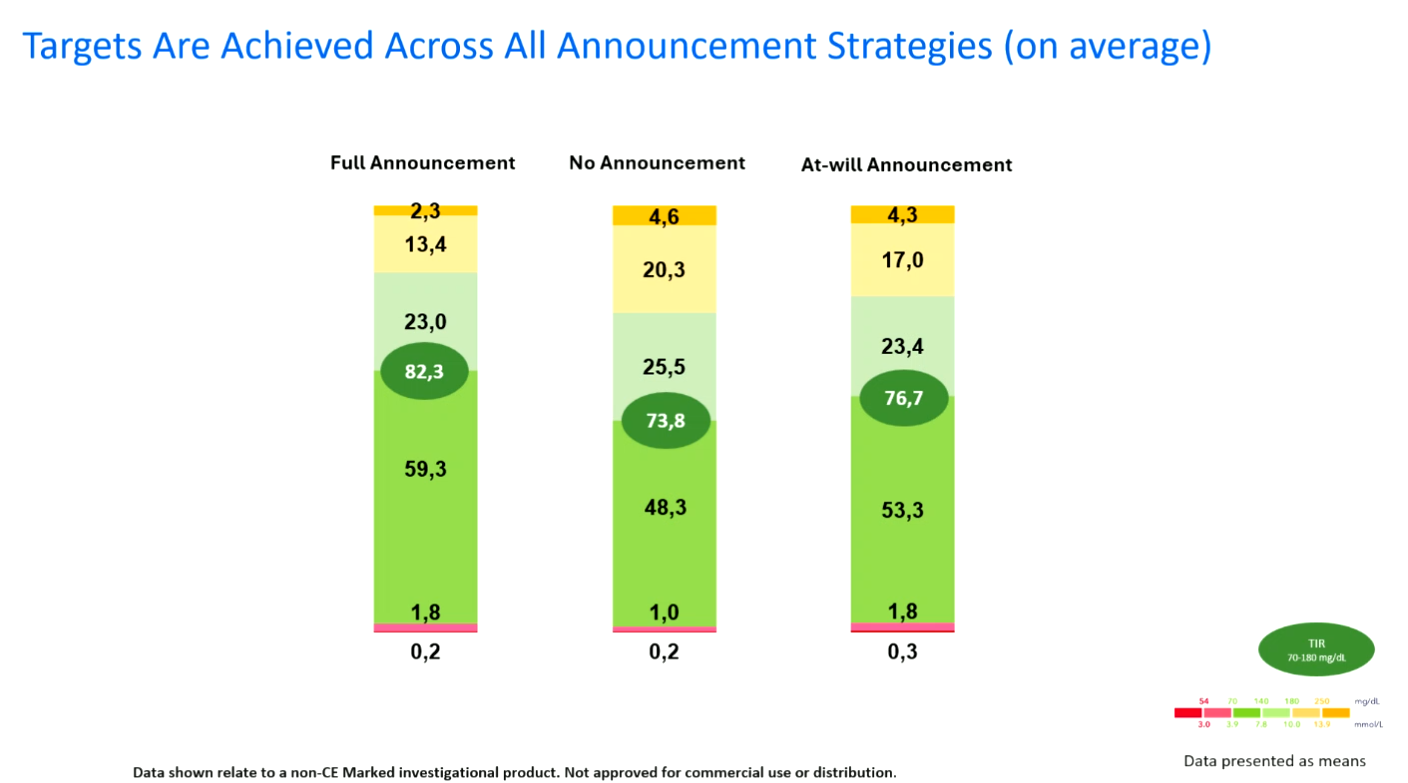
Image: Results Vivera system in feasibility trial (presented by Professor Ohad Cohen @EASD2026)
The feasibility results presented involved 24 adults with type 1 diabetes in Israel and New Zealand.
Participants already had a high baseline Time In Range (TIR) of 83.3% on MiniMed 780G.
Three successive three-week phases explored different meal-announcement strategies:
- Full announcement: TIR 82.3%, TBR 1.8% (TBR = Time Below Range <70 mg/dl or <3.9 mmol/L)
- No announcement: TIR 73.8%, TBR 1.0%
- Announcement at will: TIR 76.7%, TBR 1.8%
TIR was lower without meal announcements than with full announcement, but still above international glycemic targets.
These early results illustrate the balance between reducing daily tasks and maintaining glucose outcomes, although this small, short study cannot establish longer-term performance.
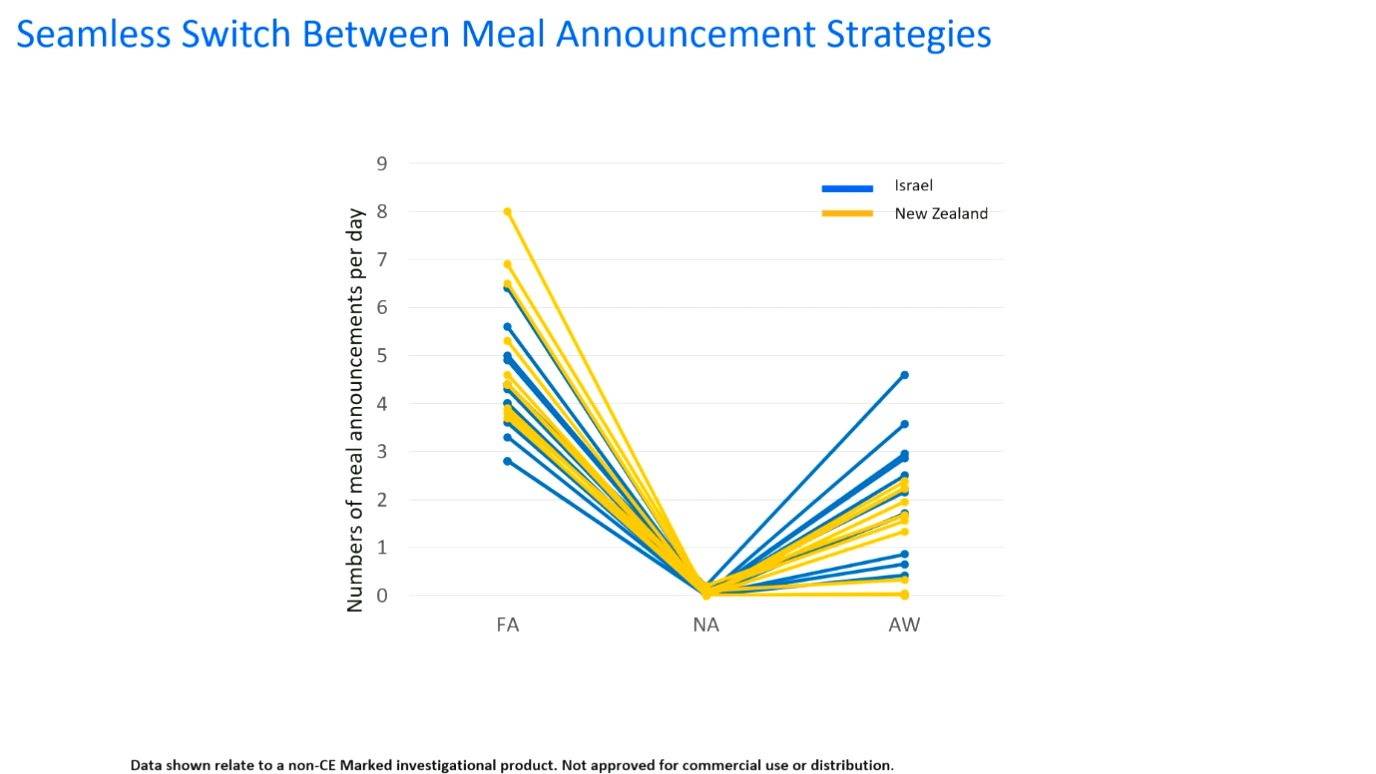
Image: Number of meal announcements per day in Vivera feasibility trial (presented by Professor Ohad Cohen @EASD2026)
During the at-will phase, participants still bolused around 1.5 times per day.
That is an interesting finding: making meal boluses optional does not mean everyone will stop giving them.
Some people may prefer to keep bolusing for particular meals while having more freedom at others.
Larger studies in the development programme include the GATEWAY, NEXUS and ELEVATE trials.
One to watch: how much daily work can we remove while maintaining glucose outcomes that matter to each person?
3. Tandem Mobi has arrived in 12 international markets
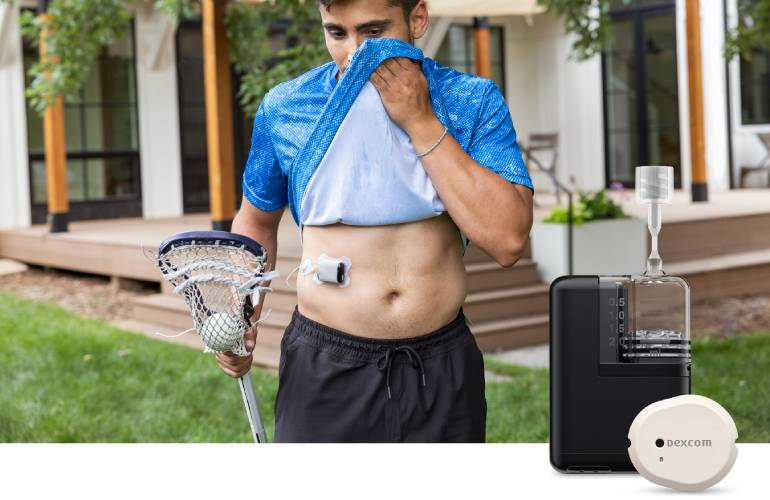
Image: Tandem Mobi with Dexcom G7 (Source: Tandem Diabetes)
This one is a confirmed launch.
Tandem announced on 28 September that Mobi is now shipping to eligible customers in Belgium, the Czech Republic, Denmark, Finland, Germany, Israel, Italy, Luxembourg, Spain, Sweden, Switzerland and the UK. Additional countries, including the Netherlands, are expected to follow.
The launch configuration combines
- Control-IQ+,
- Dexcom G7
- and control through a compatible iPhone.
Android compatibility and Abbott sensor integration are expected to begin rolling out in selected countries in 2027.
Mobi brings a semi-patch pump option to more countries.
It still uses tubing, but users can choose how to wear it: on the body in an adhesive sleeve with short tubing, clipped to clothing, or in a pocket.
This flexibility may be useful for people whose wearing preferences vary with exercise, sleep or daily activities.
Mobi also connects to Tandem Source, and users can link their Tandem Source account to Glooko to share their pump and glucose data.
For remote glucose sharing, Sugarmate is available in European app stores, including Belgium.
The app receives Dexcom glucose data and provides an additional option alongside the Dexcom Follow app. Sugarmate can also be connected to Tandem Source.
For users of the t:slim X2 pump, this means glucose data from the FreeStyle Libre 3 Plus sensor can also be viewed within the same connected ecosystem.
The practical takeaway: After years of anticipation, Mobi is now available in Europe. In many countries, it introduces a less familiar pump format: a small tubed pump that can also be worn on the body. The main addition is choice—particularly for people who want flexibility in how they wear their AID system.
4. CamAPS Liberty: fewer meal boluses, with early real-world results
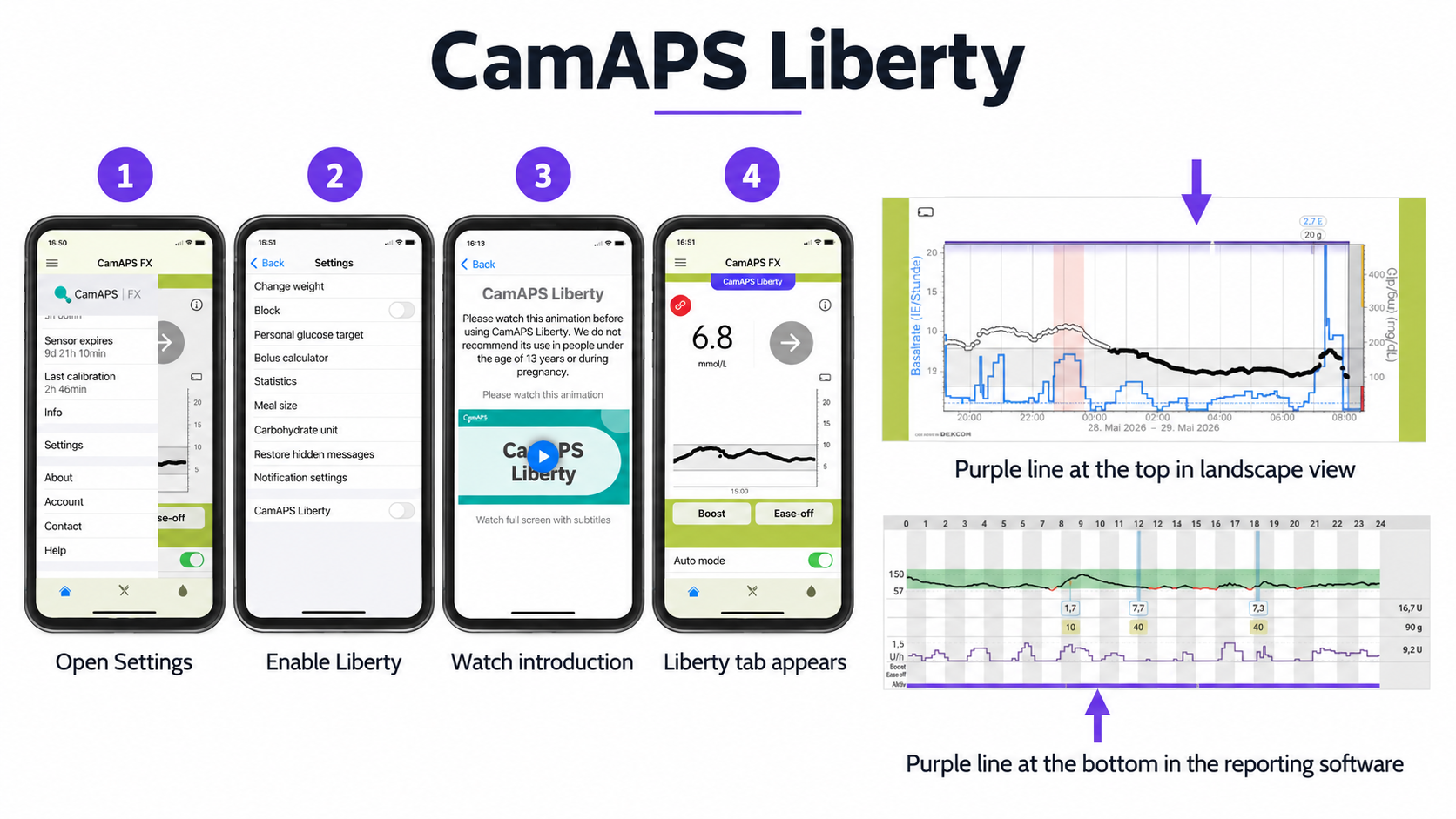
Images: CamAPS Liberty feature (Source: YouTube video “CamAPS Liberty: Getting started”)
CamAPS Liberty brings a fully closed-loop feature to the CamAPS FX app used within myLoop.
It is indicated for people with type 1 diabetes aged 13 years and older, and is not intended for pregnancy.
Once available, it can be activated in the app settings after completing the introductory training.
The rollout discussed at EASD included
- Germany in September,
- with 6 October 2026 for Belgium and the Netherlands.
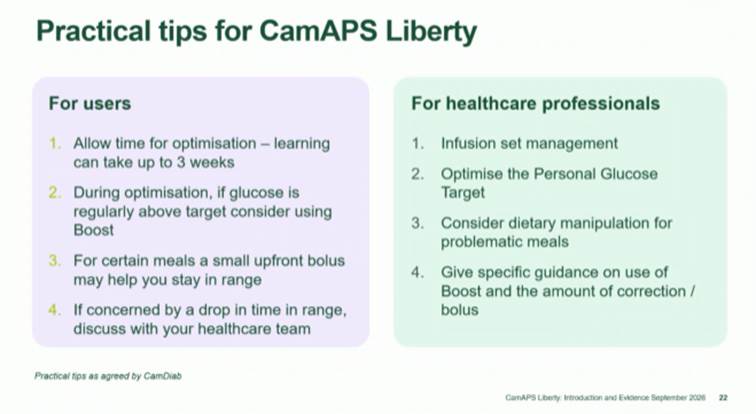
Image: Practical tips for CamAPS Liberty (Source: presented by Professor Roman Hovorka @EASD2026)
Liberty uses a version of the CamAPS algorithm designed to manage meals without requiring a bolus. Manual boluses, Boost, Ease-off and Add meal remain available.
- Allow time for adaptation. The manufacturer’s HCP guide and training webinars (English / Dutch) emphasise setting realistic expectations during the first few weeks as the algorithm learns.
- Optional support for large meals. A reduced pre-meal bolus through the bolus calculator may help with particularly carbohydrate-heavy meals. The amount should be individualised with the diabetes team. Boost also remains available to help bring elevated glucose back into range.
- Starting from injections is possible. People switching from multiple daily injections (MDI) can start directly with Liberty after completing the usual pump and app training. There is no requirement to spend an initial period in hybrid closed-loop mode, although sensor warm-up and algorithm adaptation still apply.
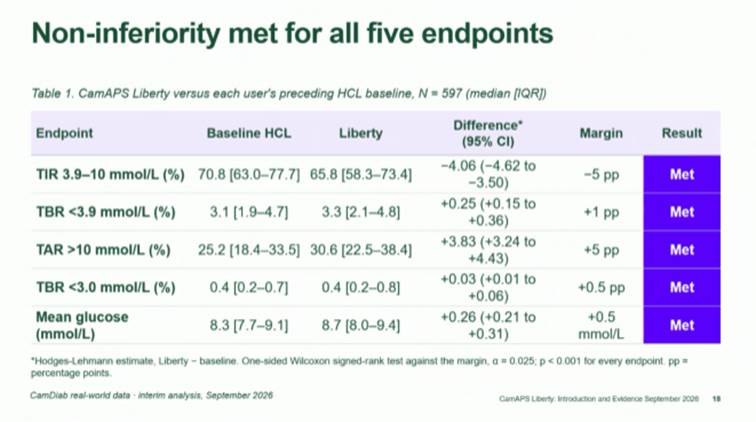
Image: Early real-world results of CamAPS Liberty (Source: presented by Professor Roman Hovorka @EASD2026)
At EASD, Professor Roman Hovorka presented an interim analysis of 597 users, comparing Liberty use with each person’s preceding hybrid closed-loop period:
- Previous HCL period: TIR 70.8%, TBR 3.1%
- Liberty period: TIR 65.8%, TBR 3.3%
The analysis met its non-inferiority criteria.
For TIR, the reported paired difference was −4%, with a 95% confidence interval within the −5-point margin. That estimate is different from simply subtracting the two group medians.
Non-inferiority does not mean that glucose outcomes were unchanged.
Median TIR was lower during Liberty use, while the reported bolus frequency fell from around 3.9 to 1.5 times per day.
These are early observational results, rather than a randomised comparison. They nevertheless give us something useful to discuss with users: less work around meals may come with a change in glucose outcomes, and the right balance will differ from person to person.
5. Inreda AP5: a more complicated picture from a longer trial
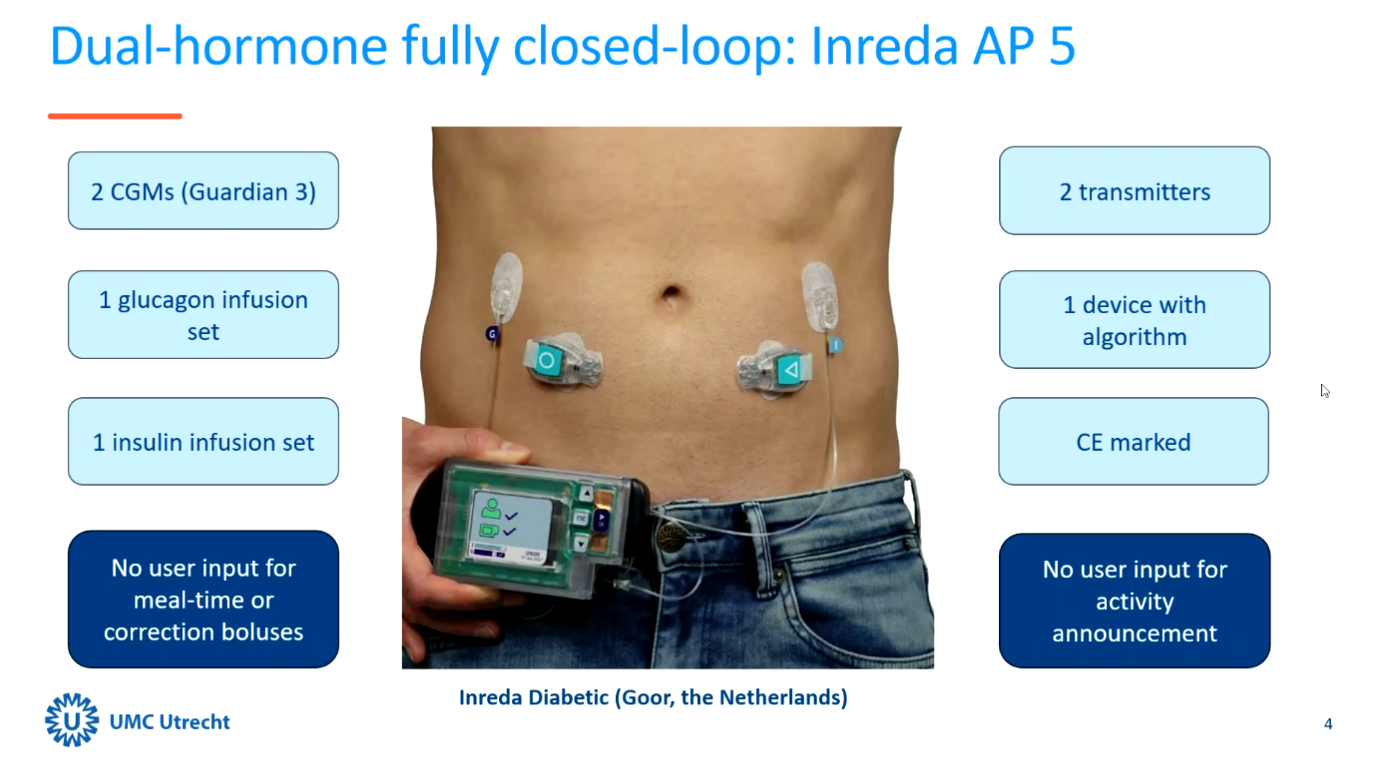
Image: System features of Inreda AP5 (Source: presented by dr. Milena Jancev @EASD2026)
Inreda’s AP5 takes a different approach to automation: it delivers both insulin and glucagon, without requiring meal announcements.
The DARE trial results presented at EASD involved 243 adults with type 1 diabetes, divided into two cohorts according to their previous treatment:
- multiple daily injections with CGM (cohort A),
- or hybrid closed-loop (cohort B).
Participants were randomised to AP5 or continuation of their existing treatment.
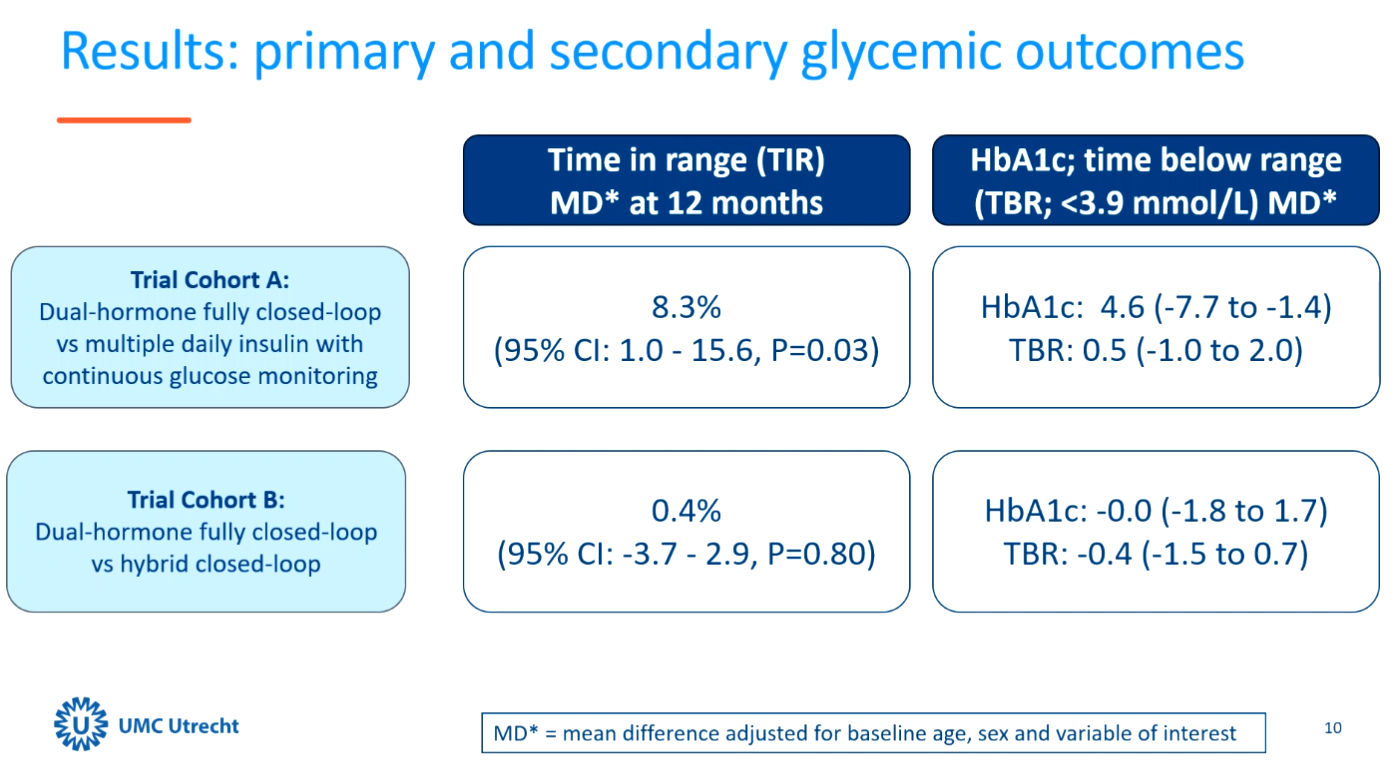
Image: Results of DARE-trial (Source: presented by dr. Milena Jancev @EASD2026)
The congress presentation reported
- an adjusted TIR advantage of 8.3 percentage points over injections plus CGM at 12 months.
- In the hybrid closed-loop cohort, there was no statistically significant TIR difference.
However, continuing treatment proved challenging: 59 of the 119 participants assigned to AP5 stopped using the system, many within the first three months.
Reported reasons included device burden, dissatisfaction with glucose outcomes, and problems with the glucagon infusion sets.
During the 12-month trial, nine severe hypoglycaemic events occurred in the AP5 group, compared with two in the usual-care group.
Six events in the AP5 group required hospitalisation or an emergency department visit, compared with none in usual care. No diabetic ketoacidosis occurred.
A switch from GlucaGen to Glugon may have affected performance.
Inreda’s response discusses this issue and the need for further evidence.
Following its assessment, Zorginstituut Nederland concluded that the evidence was insufficient for inclusion in the Dutch basic insurance package for the assessed indication.
Discussions about arrangements for existing users are ongoing.
For me, these results highlight that reducing meal decisions is only part of the challenge.
The complete system also needs to be reliable, manageable and comfortable enough for people to keep using.
6. PharmaSens and SiBionics: bringing the pump and sensor together
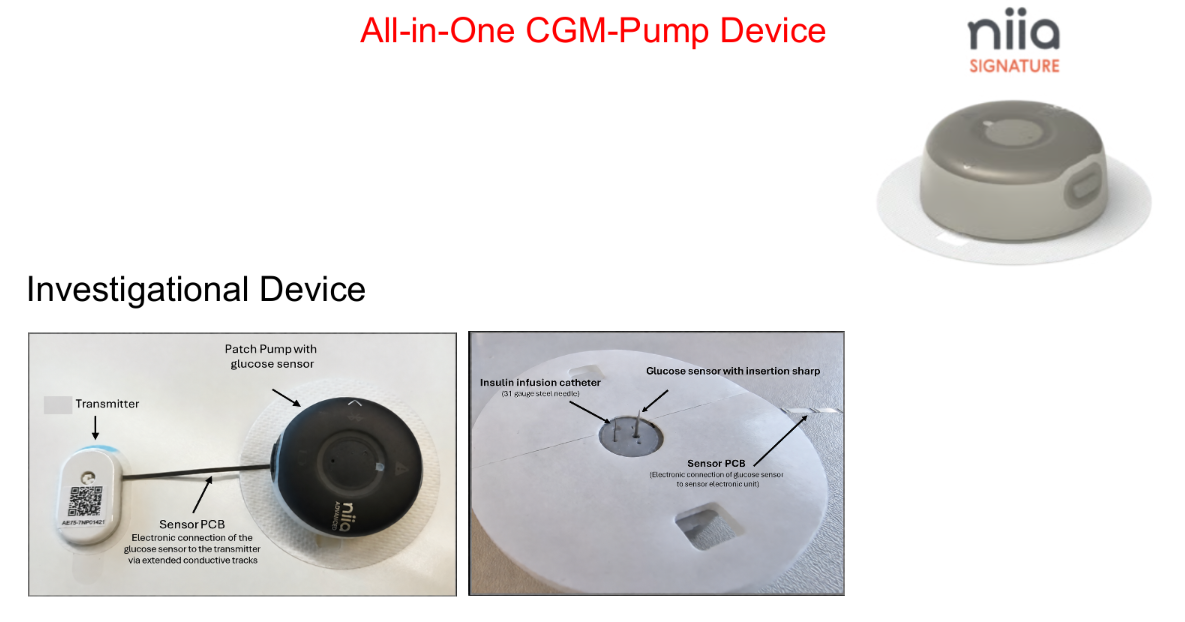
Image: All-in-one CGM-Pump investigational device (Source: presented by Professor Ahmad Haidar @EASD2026)
PharmaSens and SiBionics are developing an integrated system that brings together:
- PharmaSens’ niia signature insulin pump
- SiBionics’ GS3 glucose-sensing technology
- And an AID algorithm developed by Professor Ahmad Haidar’s team at McGill University
The SMART02 study evaluates the integrated pump and sensor in support of niia signature development. Professor Haidar presented preliminary results at EASD 2026.
In the current prototype, the transmitter is still separate from the pump, but the plan is to integrate it into the final product.
The three-day wear time applied only to the SMART02 study.
For the final niia signature system, the team is aiming for 5–7 days of wear, with the infusion set and glucose sensor inserted and replaced together.
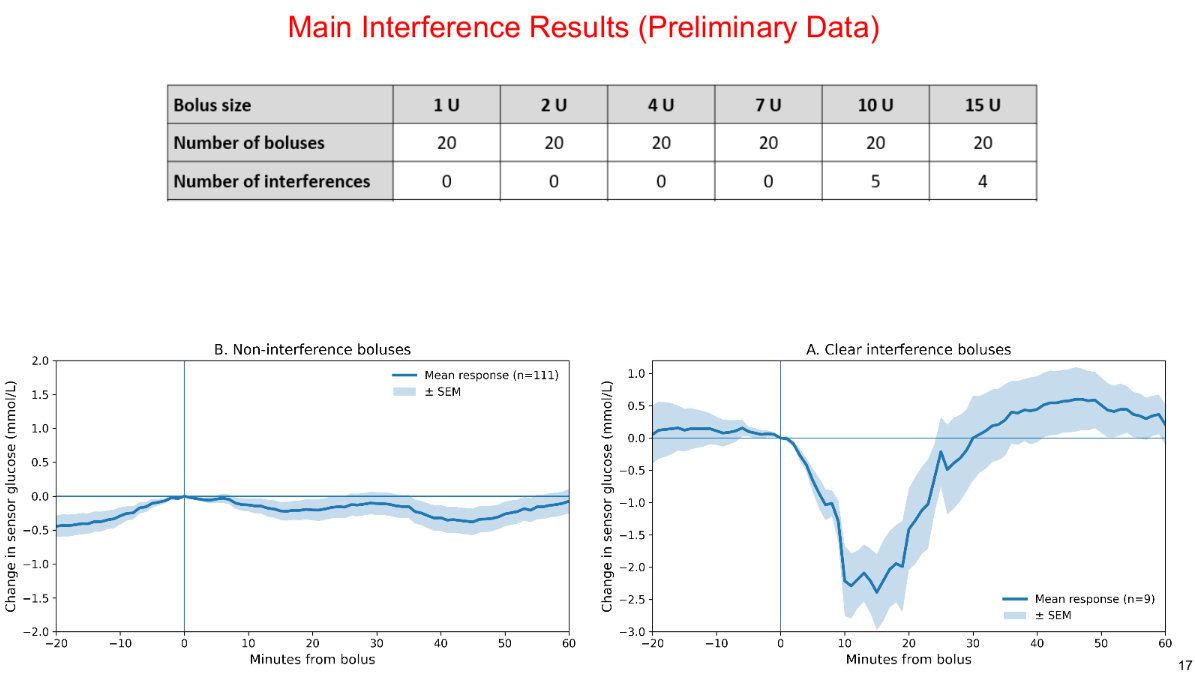
Image: Interference results of an all-in-one CGM-Pump device (Source: presented by Professor Ahmad Haidar @EASD2026)
One practical question is whether delivering insulin close to the glucose sensor affects its readings.
The presentation showed results from 20 boluses at each tested dose:
- 1, 2, 4 and 7 units: no interference events.
- 10 units: interference after 5 of 20 boluses.
- 15 units: interference after 4 of 20 boluses.
When interference occurred, the sensor readings briefly dipped. This happened after some larger boluses, rather than consistently above a particular dose.
That matters for an AID system: an artificially low sensor reading could influence how much insulin the algorithm delivers.
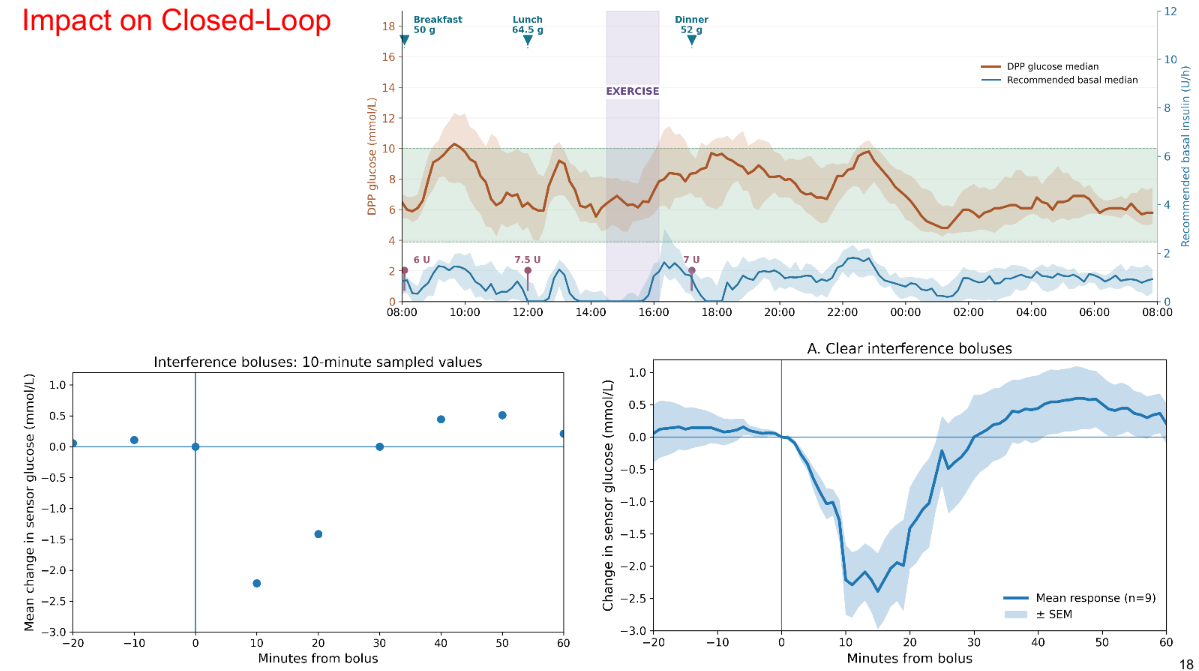
Image: Impact of interference on an all-in-one CGM-Pump device in Closed-Loop (Source: presented by Professor Ahmad Haidar @EASD2026)
The team discussed ways to account for these temporary dips in sensor processing and automated insulin delivery. These approaches still need validation.
The system remains investigational, and discussions at EASD suggested that commercialisation is still several years away.
For me, the appeal is clear: fewer separate devices to wear. These early results also show why combining a pump and sensor requires careful testing of how they interact.
7. Libre Duo: ketone data will need good education
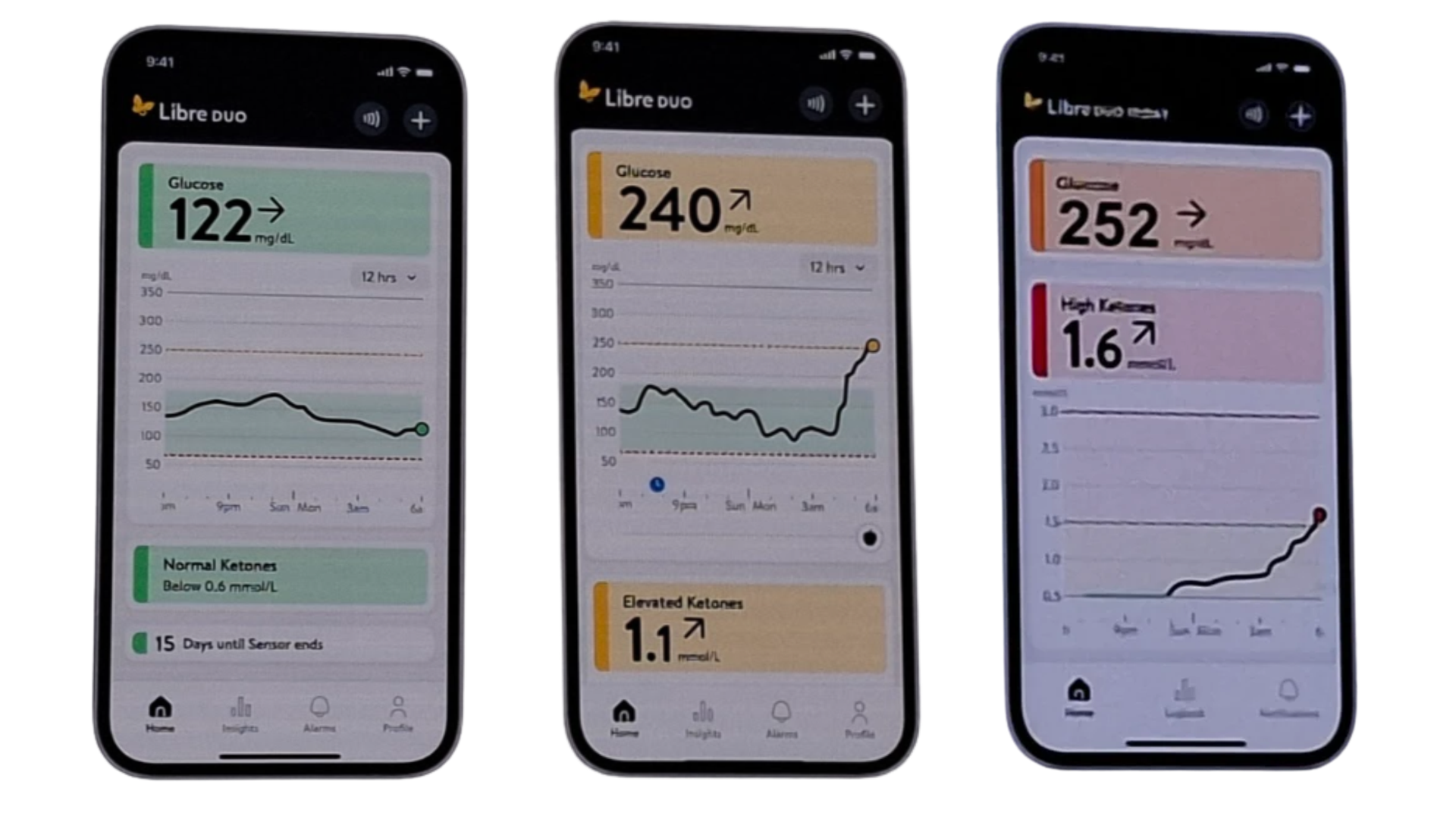
Images: Different ketone banners in the Libre Duo app (Source: presented by Professor Chantal Mathieu @EASD2026)
Abbott’s Libre Duo and Libre Duo 10 Day systems have received CE marking. They combine glucose and ketone monitoring in one sensor.
At EASD, Abbott showed how the information could appear in the app:
- a glucose-focused display when ketones are low,
- with numerical ketone values and trend information becoming more prominent as ketones rise.
- The presentation also showed ketone curves in LibreView.
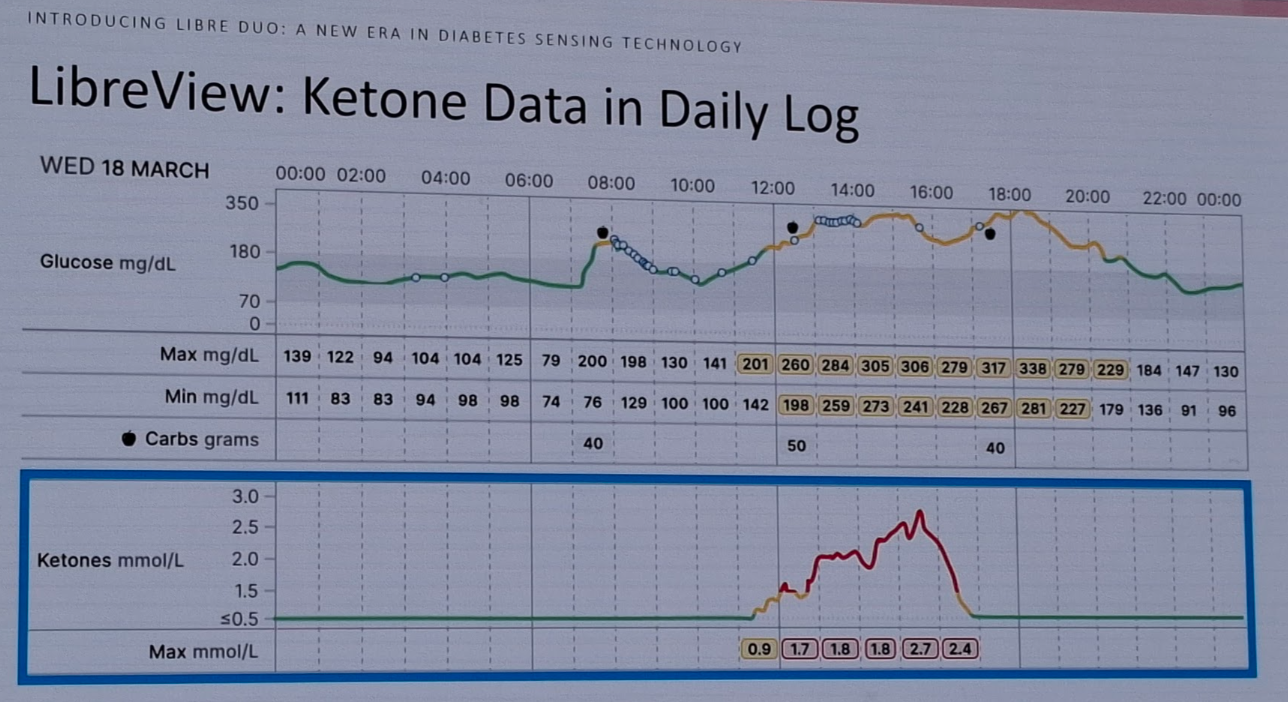
Images: Continuous ketone data in LibreView (Source: presented by Professor Chantal Mathieu @EASD2026)
That raises a practical question: what should people do with all these extra ketone readings?
Ketones go up and down.
Continuous monitoring will make those fluctuations much more visible—including differences between people and changes from one day to the next in the same person.
We already have a glimpse of this from studies using the SiBio ketone sensor. In Sabelli and colleagues’ study, 16 adults with type 1 diabetes using AID tried very-low-carbohydrate intake and intermittent fasting.
- Across 155 participant-days, researchers recorded 81 transient ketone episodes of at least 0.6 mmol/L.
- The median duration was around an hour, and almost all were asymptomatic.
These findings relate to specific dietary conditions, but they illustrate how continuous monitoring can reveal elevations we would otherwise miss.
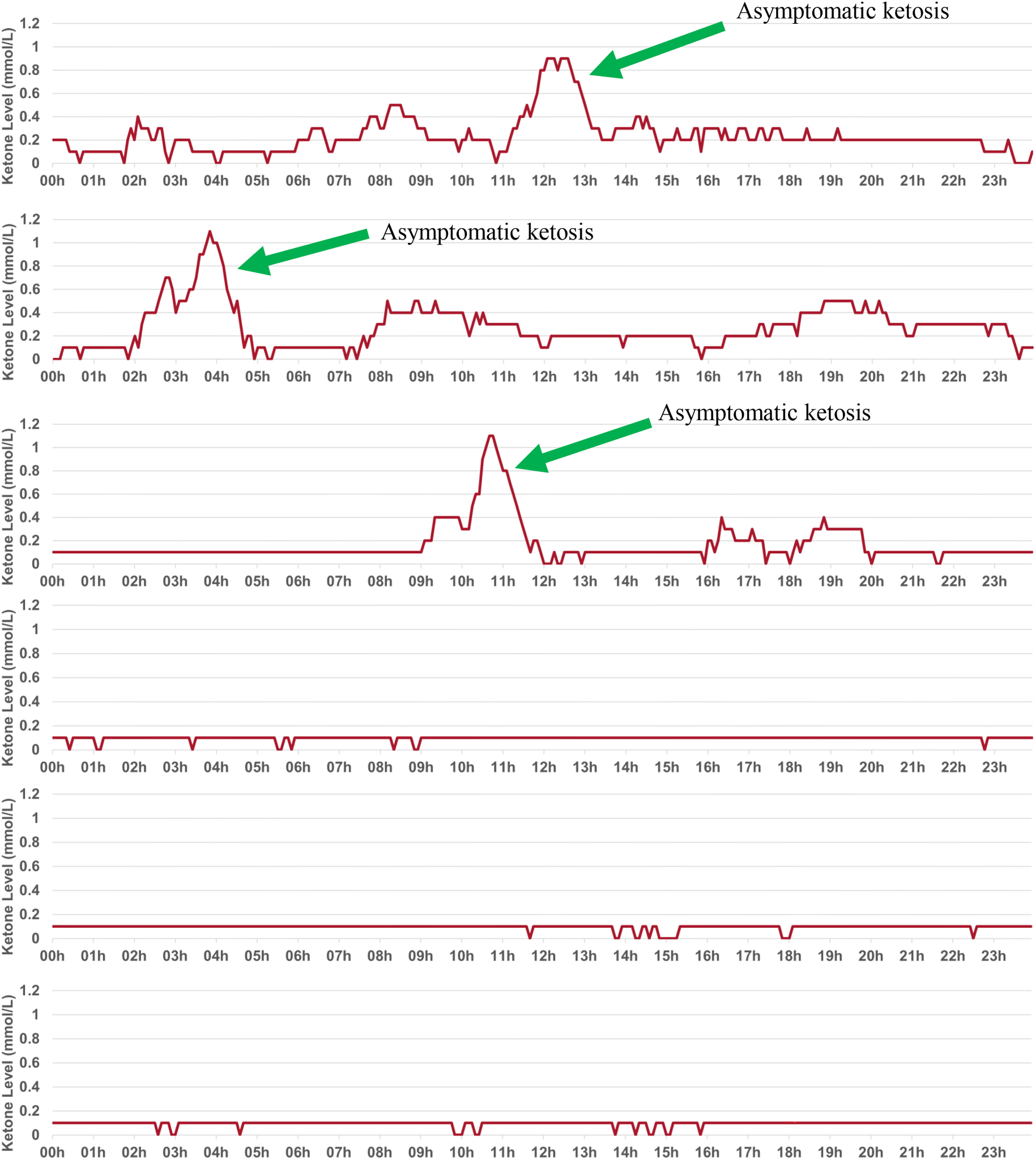
Image: Transient benign ketosis in people with type 1 diabetes during very-low carb states (Source: Sabelli et al. DTT Jan 2026)
Another example comes from the EmpaCKM study at McGill University, investigating ketone patterns during empagliflozin treatment using continuous ketone monitoring.
The data presented involved 20 adults with type 1 diabetes.
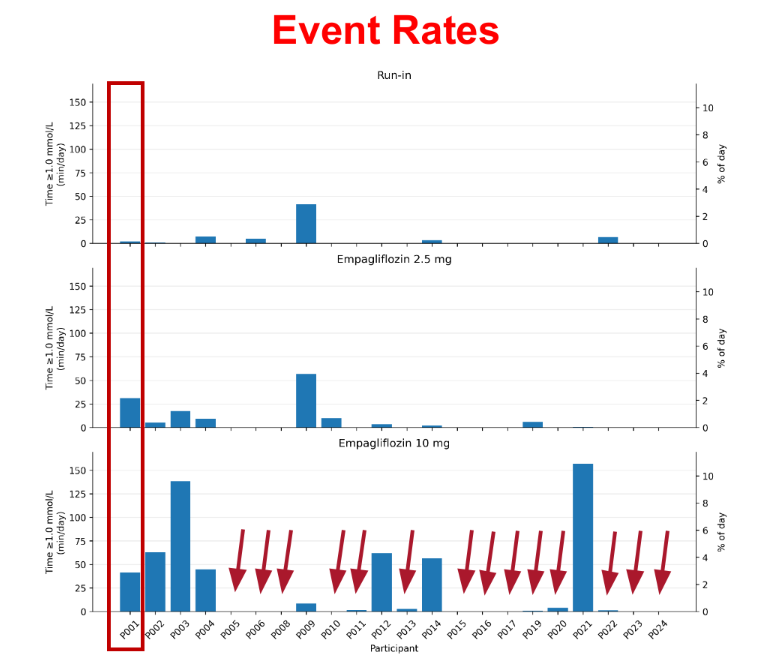
Image: Event rates of ketone events in people with type 1 diabetes on Empagliflozin (Source: presented by Professor Ahmad Haidar @EASD2026)
What caught my attention was the variation between participants and from one day to the next within the same person.
A single ketone measurement cannot show that full picture.
Here, too, the context matters: empagliflozin can increase ketone levels and DKA risk, so these patterns cannot simply be applied to everyone with type 1 diabetes.
As we move towards dual glucose–ketone sensors, I expect diabetes teams may receive quite a few extra telephone calls.
People will see ketone rises that previously went unnoticed.
Some will need prompt action; others may be short-lived changes associated with fasting, carbohydrate restriction or prolonged exercise.
We will need to interpret the reading together with the clinical picture.
- What is the ketone trend? Is it rising quickly, staying elevated or already falling?
- What is the glucose trend? Normal glucose does not rule out DKA.
- Are there symptoms? Nausea, vomiting, abdominal pain or unusual breathing change the urgency.
- Could insulin delivery have been interrupted? When was the infusion set changed, and could it be blocked or dislodged?
- What happened recently? Food intake, fasting, exercise and illness all help explain the context.
The 2026 international expert recommendations on continuous ketone monitoring, endorsed by ISPAD, provide a starting framework:
- Below 0.6 mmol/L = Normal: No action necessary
- 0.6–1.5 mmol/L = Elevated: Monitor glucose, check insulin administration, take fluids/carbs/insulin according to your sick day plan
- Above 1.5 to below 3.0 mmol/L = High: Monitor glucose, check insulin administration, take fluids/carbs/insulin according to your sick day plan + contact your healthcare professional
- 3.0 mmol/L or higher = Urgent: Monitor glucose, check insulin administration, take fluids/carbs/insulin according to your sick day plan + seek immediate medical attention
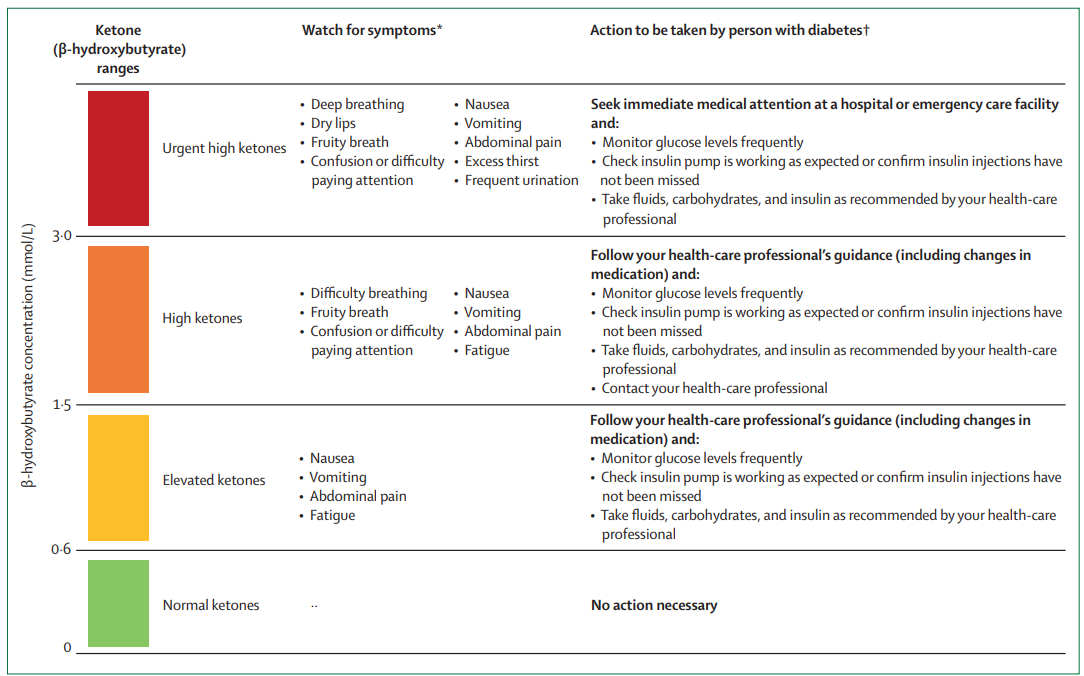
Image: Practical recommendations on continuous ketone monitoring thresholds (Source: Dhatariya et al. Lancet Diab Endocrinol 2026)
These recommendations explain when to act and when to seek help.
The practical details—how much to drink, when to take carbohydrates and how to adjust insulin—should be covered in an individual sick-day plan agreed with the diabetes team.
- Resources such as the DTN-UK guidance on sick-day management and pump failures can support this education.
- For people taking an SGLT2 inhibitor, education should also include a specific risk-management plan, such as the STICH approach described in the international SGLT inhibitor consensus.
For now, I think we should avoid turning every small, short-lived ketone rise into a source of anxiety or an automatic telephone call.
The recommended actions still apply, while symptoms and clinical context help determine whether additional support is needed.
We need more data to refine alerts at lower levels.
Clear education should help people follow their sick-day plan confidently and recognise when to seek help.
Continuous ketone monitoring should make life with diabetes easier and safer,
without creating unnecessary stress or avoidable pressure on diabetes teams.
8. CareSens Air: stronger published accuracy evidence
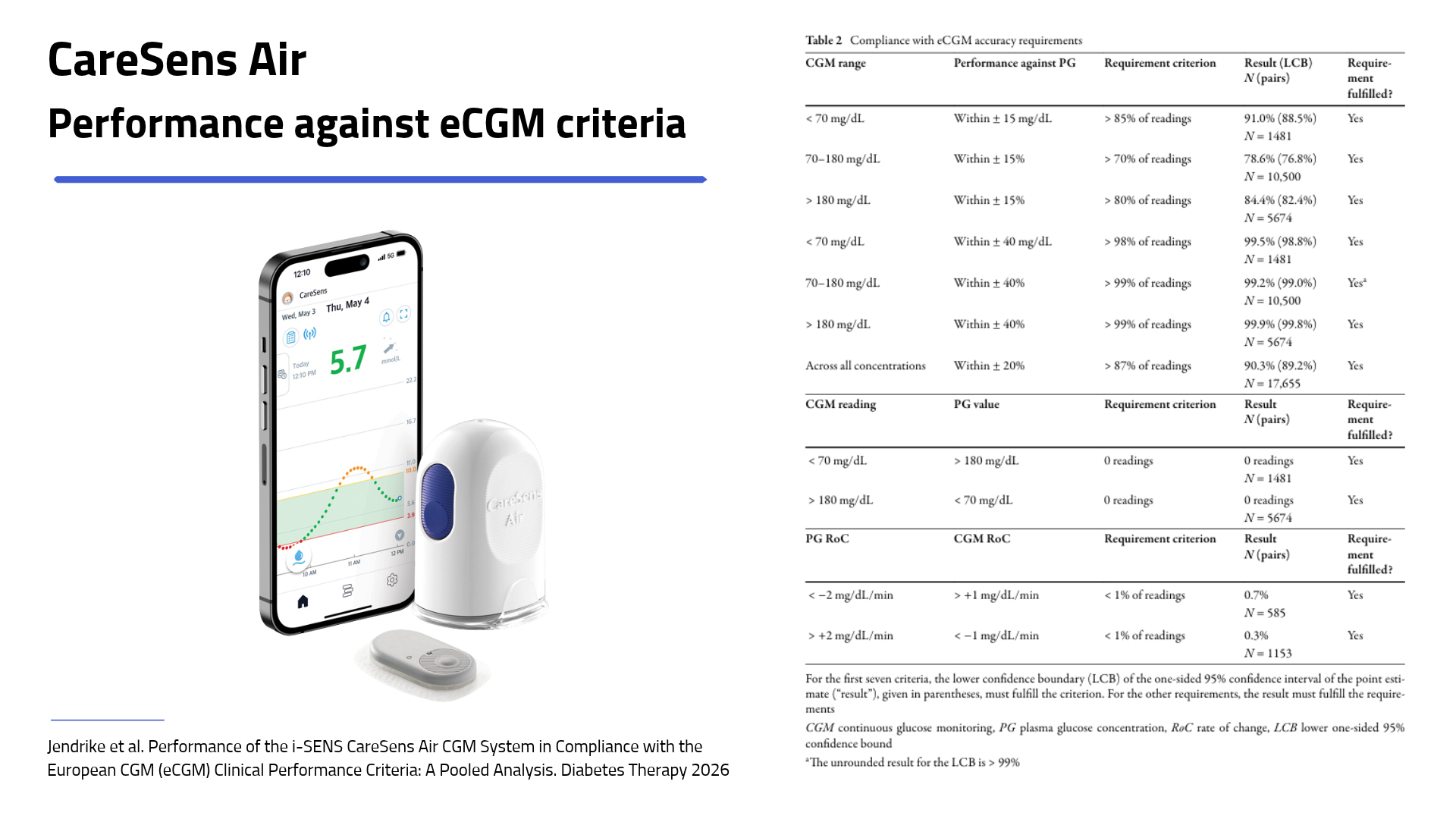
CareSens Air now has a peer-reviewed pooled analysis assessing the proposed European eCGM performance criteria.
- The analysis included 164 participants and 17,655 paired measurements.
- It reported a MARD of 9.5% and 92.4% agreement within the 20/20 criterion.
- The system met the proposed eCGM accuracy requirements.
These results strengthen the published evidence for CareSens Air’s accuracy.
Meeting the proposed eCGM framework does not constitute a separate regulatory approval or automatically authorise pump integration.
The September 2026 DSN Forum UK comparison chart, which compares glucose sensors and their supporting evidence, also reports favourable accuracy results and awards CareSens Air 5 out of 5 for study design. This score reflects how the studies were conducted, rather than an overall rating of the sensor.
For me, it is encouraging to see more published evidence supporting the accuracy of an expanding range of CGMs.
9. More CGMs to keep an eye on
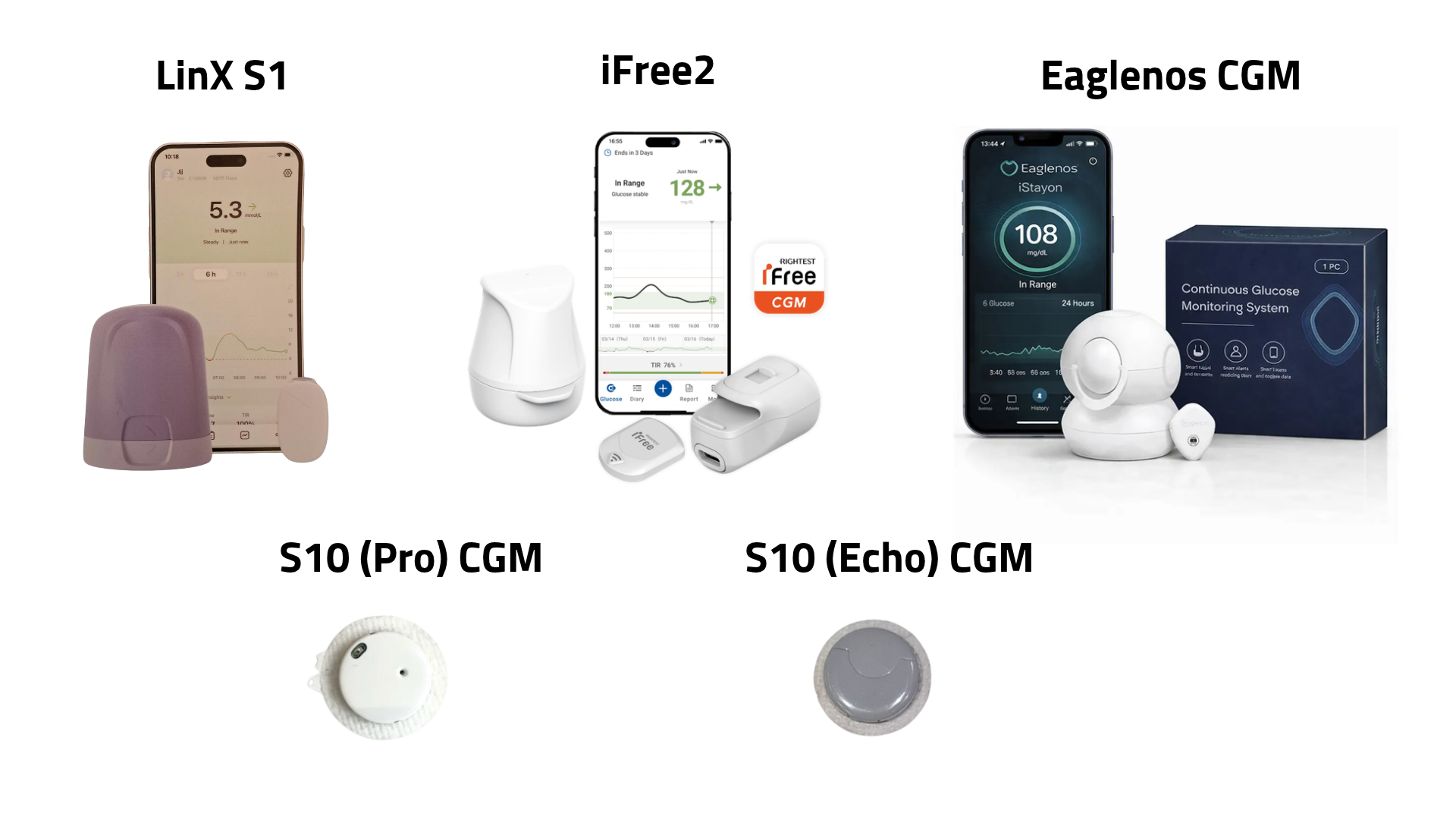
There was plenty happening beyond the established brands too.
LinX S1 — MicroTech Medical
LinX S1 combines a disposable sensor with a reusable transmitter.
- MicroTech confirms CE certification in April 2026, and the system was presented at EASD as approved for people aged two years and older.
- The sensor lasts 15 days, while the transmitter is designed to last two years without charging.
Keeping the transmitter separate could help reduce recurring costs. According to the team at the booth, the company plans to commercialise it particularly in markets where affordability is a major consideration.
RIGHTEST iFree2 — Bionime
Taiwan-based Bionime announced EU MDR certification for iFree2 in July 2026.
The system was presented at EASD with 15-day wear and optional calibration.
Local availability remains the next question.
S10 — Medtrum
Medtrum’s smaller S10 sensor is being developed in two versions:
- S10 Echo: a separate sensor and transmitter.
- S10 Pro: an all-in-one sensor intended to connect to the TouchCare Nano AID system.
According to the information shared at EASD, both versions are designed for 14-day wear, and neither had a CE mark at the time of the congress.
Eaglenos CGM
According to the booth team, this was Eaglenos’ first appearance at EASD.
- The company presented its CGM as CE-marked, with 15-day wear and no calibration required.
- Its website also describes an all-in-one, calibration-free design.
Another company to follow as more information becomes available about clinical performance, pricing and local access.
More choice is welcome—especially if it makes CGM more affordable.
For each new sensor, I also want to see the accuracy evidence and understand how it performs in everyday use.
10. Teljane: from glucose to continuous lactate monitoring
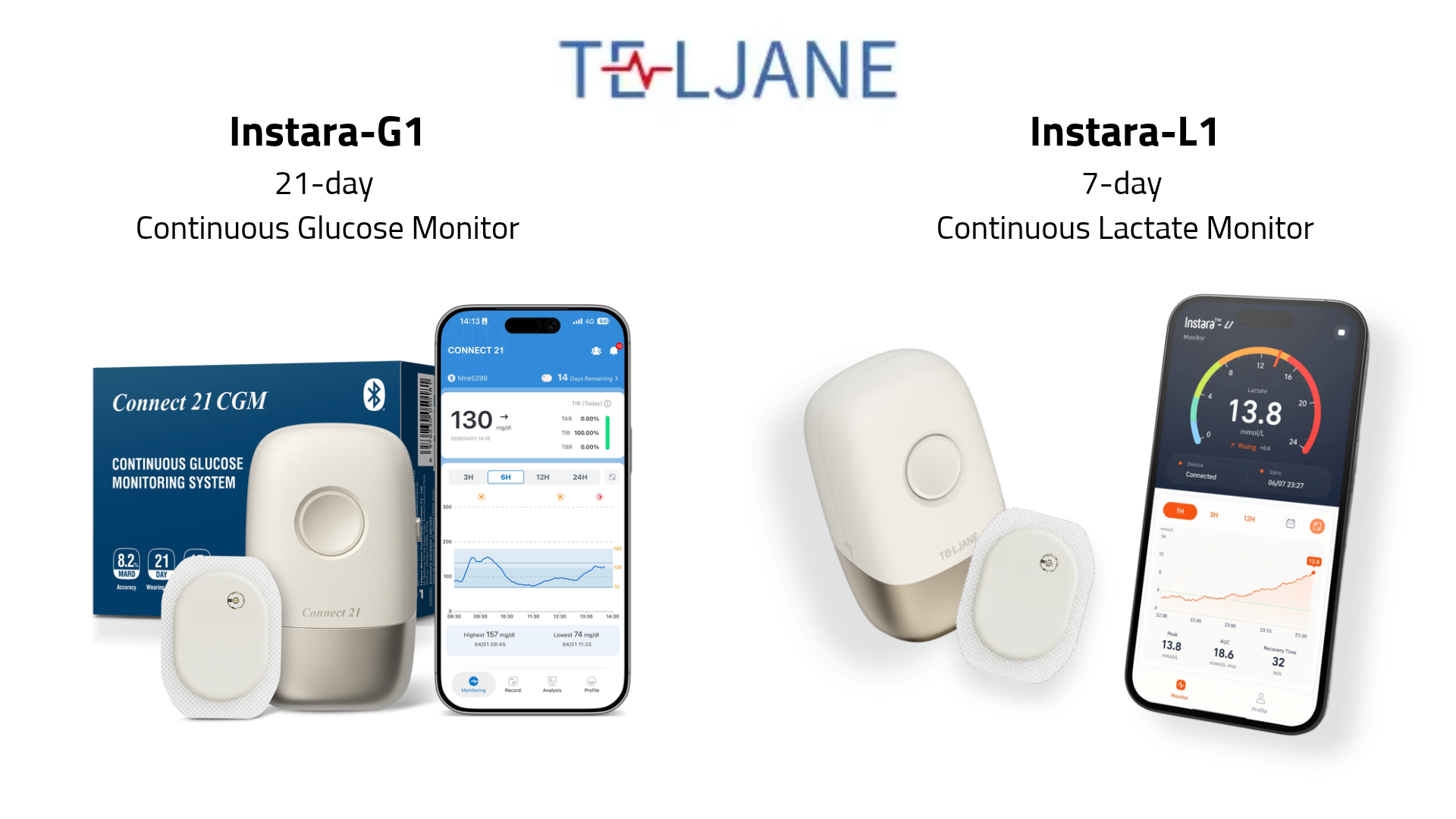
Image: Teljane’s Instara-G1 glucose monitor and Instara-L1 lactate monitor—two wearables measuring different aspects of metabolism.
Teljane presented Instara-G1, its glucose sensor with a reported 21-day wear time and 15-minute warm-up, at ATTD earlier this year.
At EASD, the company introduced its next step: Instara-L1, a continuous lactate monitor designed for sports science.
For the glucose sensor, an initial paediatric study reported a MARD of 8.6%, based on 32 participants and 1,523 paired measurements.
These are preliminary results from a dataset smaller than those recommended in the FIND CGM performance factsheet.
Larger studies are needed for a robust assessment of accuracy.
The Instara-L1 lactate monitor offers, according to the manufacturer:
- Up to seven days of wear
- A 15-minute warm-up
- Readings every minute
- Lactate trends, peak values, area under the curve and recovery time
But what could continuous lactate monitoring actually add?
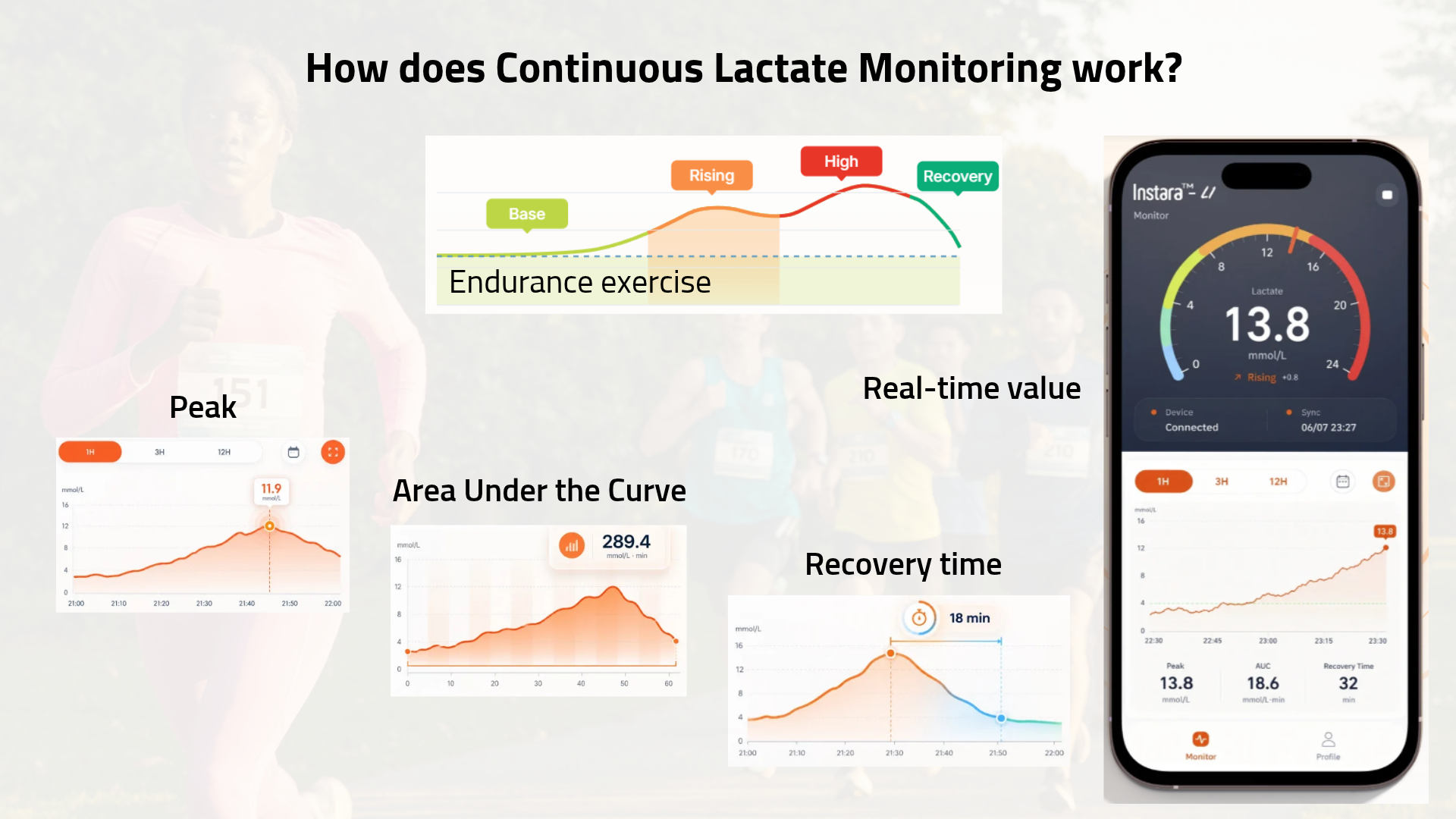
Image: Instara-L1 app displays, including lactate trends, peak values, area under the curve and estimated recovery time. Source: Teljane.
Lactate is a fuel that the body produces and reuses. Its concentration reflects the balance between production and removal, both at rest and during exercise.
A rise during a hard workout is a normal physiological response.
For athletes, continuous monitoring could bring lactate testing out of the laboratory and into everyday training. Instead of taking blood samples at selected moments, a wearable could show when lactate starts to rise, how it responds to changes in pace or power, and how it falls afterwards.
The potential is more individualised training: understanding the response to a particular workload and following changes over time. Before translating those readings into training advice, however, we need to know how reliably each sensor corresponds to blood lactate and established exercise thresholds. Lactate returning to baseline also does not necessarily mean that someone has fully recovered.
For people with type 1 diabetes, lactate could eventually add context to glucose and activity data. Different types of exercise can produce different glucose responses, making insulin and carbohydrate decisions challenging. A study in adults using hybrid closed-loop therapy found different lactate responses during moderate-intensity, high-intensity and resistance exercise.
Could that extra signal help future systems recognise the activity taking place and better anticipate insulin needs? That is an interesting research question, rather than an established use today.
For type 2 diabetes and prevention, researchers are exploring whether lactate offers additional information about metabolic health. Higher resting blood lactate has been associated with future diabetes risk in the ARIC study.
This raises questions about whether patterns during rest and exercise could help track changes in fitness or metabolism. It does not yet establish that a wearable can diagnose insulin resistance or detect diabetes earlier than existing tests.
For me, the exciting part is the possibility of understanding more about how the body responds to activity.
The next step is to show which lactate patterns are useful—and whether acting on them improves training or diabetes care.
Of course, these were only 10 highlights from a congress packed with new devices, research and discussions.
What stayed with me most was the focus on reducing the work of living with diabetes: fewer meal decisions, smaller devices and earlier information about potential problems.
The next step is making sure those developments deliver benefits people can feel in everyday life.
Want to keep up with what comes next?
Subscribe to Diabetotech’s updates and explore our diabetes technology courses.
Kind regards,